
Usage Rights: All content is available for editorial use with attribution to Roswell Park Comprehensive Cancer Center.

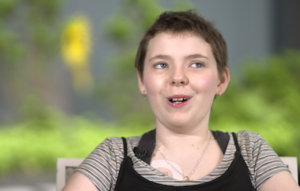
BUFFALO, N.Y. — Just a year ago, a 6-year-old girl was celebrating a very different Christmas, in treatment for cancer and isolated from friends and many loved ones. But this year, Bryn Ailinger is chemo-free for her favorite holiday thanks to a breakthrough treatment at Roswell Park Comprehensive Cancer Center for the most common childhood cancer, leukemia.
Roswell Park is at the forefront of a personalized cancer treatment option, called CAR T-cell therapy, which transforms a patient’s own cells into cancer-fighting supercells, offering new hope for the possibility of a long, healthy life.
On April 29, 2024, Bryn was diagnosed with precursor B-cell acute lymphoblastic leukemia. Because her cancer cells harbored a rare and aggressive mutation, TCF3-HLH, standard chemotherapies proved ineffective.
“You think the worst immediately,” said Justin Ailinger, Bryn’s father. “I didn’t know if I was going to have a daughter by the end of the year.”
Bryn’s care team from the Roswell Park Oishei Children’s Pediatric Cancer and Blood Disorders Program then presented CAR T-cell therapy as an option, and today, the 6-year-old is in remission, ready to celebrate her favorite holiday, Christmas, surrounded once again by friends and family.
“I look at her, and I see a miracle,” said Meghan Higman, MD, PhD, a pediatric oncologist at Roswell Park specializing in blood cancers. “That’s because this kid five years ago wouldn’t have been alive, and now she’s alive, thriving and just, wow.”
Dr. Higman and her Roswell Park colleagues recommend CAR T-cell therapy even for their youngest patients who can benefit — not only for its efficacy but also its safety compared to chemo.
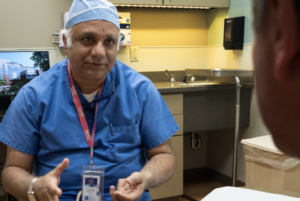
“Chemotherapy is so toxic,” said Ajay Gupta, MD, MS, a pediatric oncologist at Roswell Park specializing in sarcomas. “We’re trying to make it so that patients have a better quality of life even after they’re done with treatment. And so I feel strongly that approaches that can change the immune system, like CAR T-cells, can actually do this without causing long-term side effects.”
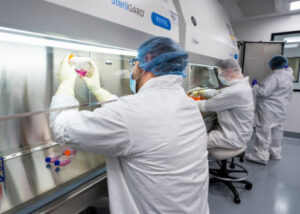
CAR T-cell therapy involves extracting T cells, a type of immune cell, from a patient’s blood and then taking them into a specialized lab. From there, scientists engineer the cells to recognize and kill cancer cells. The cells are then duplicated by the millions and replaced in the patient’s body through an IV infusion.
The cells are processed in Roswell Park’s newly expanded Good Manufacturing Practice Engineering & Cell Manufacturing Facility (GEM), the largest facility of its kind in the United States. It contains 20 sterile rooms across two buildings, marking a transformative step for cancer research and treatment.
“I hope for other children that have this mutation pop up that they’re able to collaborate with Dr. Higman and the others, and try these same therapies that were successful for Bryn,” Ailinger said. “I hope that she’s able to help save lives for other children as well that go through this.”
The results of CAR T-cell therapy so far have been highly promising, with acute leukemia remaining undetectable in more than 80 percent of patients following their treatment. As of now, CAR T-cell therapy is FDA-approved only for certain types of blood cancer, but Roswell Park is also working to expand the use of the treatment against other cancers — from rare types like sarcoma to the second most common cancer in kids, brain tumors.
“Our next job is how can we get them into more solid tumors or into places that it’s hard to get to because the immune system doesn’t really get there as well as it should,” Higman said. “Like the brain — chemo often doesn’t get there because of the way that the blood-brain barrier works. So what we really need to do is build more things to keep it around for everybody.”
To learn more about the unique resources available at the only National Cancer Institute-designated comprehensive cancer center in Upstate New York, as well as the capabilities and expertise housed within the Roswell Park GMP Engineering & Cell Manufacturing Facility (GEM), visit roswellpark.org/gmp.